


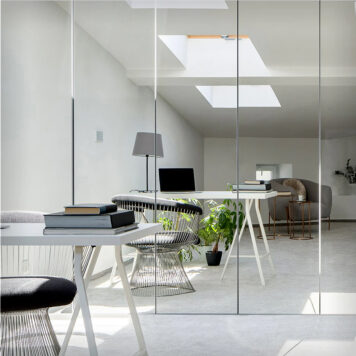





Some reflective films can be installed by competent users with the correct tools, a suitable fitting solution, and proper preparation.
Professional installation may be preferable for large panes, commercial glazing or specialist glass.
Reflective window film provides a practical way to increase daytime privacy while helping to reduce solar heat and glare. Applied directly to suitable glazing, it creates a mirrored or semi-reflective appearance on the brighter side of the glass without requiring window replacements.
At Window Films Direct, we supply professional-grade reflective films for trade installers, contractors and commercial projects throughout the UK. Our range includes silver, bronze and tinted reflective finishes designed for offices, retail premises, schools, conservatories and residential glazing.
Whether the priority is managing excessive sunlight, improving daytime privacy or creating a more uniform external appearance, reflective window film offers a flexible solution for a wide range of glazing applications.
Reflective film can combine solar-control performance with a distinctive mirrored appearance.
Depending on the product selected, potential benefits include:
Performance varies between products, glazing types and building orientations, so the individual technical specification should always be checked before ordering.
Reflective film contains a metallic or reflective layer designed to reject part of the solar energy passing through the glass.
The film may work by reflecting, absorbing or filtering different parts of the solar spectrum. This can reduce:
The balance between reflectivity, heat rejection and visible light transmission differs between products.
A darker or more reflective-looking film does not necessarily provide the best performance for every project, so selection should be based on technical data as well as appearance.
For a stronger silver mirrored finish, explore our Silver Reflective Window Film range.
Reflective film can create a one-way privacy effect when one side of the glass is significantly brighter than the other.
During daylight, the exterior is usually brighter, so the outside surface appears mirrored while occupants can retain some visibility through the glass from inside.
This effect depends on:
Reflective film should not be treated as a complete day-and-night privacy solution.
Where privacy is required during both daylight and darkness, Frosted Window Film is normally more suitable.
At night, interior lighting is often brighter than the exterior. This can reduce or reverse the privacy effect, making it easier to see into the building from outside.
Where night-time privacy is important, additional blinds, curtains or a permanently obscuring film may be required.
For internal partitions, bathrooms or areas that need privacy regardless of lighting, frosted, blackout or white-out film is usually more suitable.
Our range includes several different finishes for different design and performance requirements.
Silver reflective film creates a strong mirrored appearance and is commonly selected for solar-control and daytime-privacy applications.
It is suitable for offices, commercial buildings, conservatories and other sun-exposed glazing.
Bronze reflective film combines solar performance with a warmer external appearance.
It may be better suited to buildings where a silver mirror finish would not complement the existing architecture or glazing.
Tinted reflective films provide a balance of colour, solar control and privacy.
The visible appearance will vary according to the film shade, glass and surrounding light.
Some glazing systems require an externally applied reflective or solar-control film.
External films can be useful where internal installation is unsuitable, but they must be selected specifically for exterior exposure and installed in accordance with the product guidance.
Certain coated or laminated glazing systems may require an External Solar Window Film.
Reflective film is widely used in commercial and public-sector properties where glare, heat or daytime privacy affects how the space is used.
Typical applications include:
It can help reduce glare on computer screens, improve comfort near large windows and give a building a more consistent external appearance.
Reflective window film can also be used in homes with heavily exposed or overlooked glazing.
Common applications include:
Homeowners should be made aware that reflective privacy depends on lighting conditions and may not remain effective after dark.
Selected reflective films can reduce the amount of solar heat entering through the glazing.
This may help create a more comfortable indoor environment and reduce glare affecting:
The actual result depends on the film, glass type, window orientation, area of glazing and intensity of sunlight.
Many reflective window films reduce a proportion of ultraviolet radiation passing through the glass.
This may help slow fading and deterioration affecting:
Ultraviolet exposure is only one cause of fading, so reflective film can reduce the risk but cannot prevent all deterioration.
By reducing solar heat gain, suitable reflective film may help lower the demand placed on air-conditioning and cooling systems.
Potential energy benefits will depend on:
Reflective film should therefore be considered as part of a wider approach to heat and energy management.
Not every reflective film is suitable for every type of glass.
Compatibility should be checked carefully for:
Highly absorbent or reflective films can increase thermal stress in certain glazing systems. The product specification should always be checked before installation.
Most professional adhesive-backed reflective films are installed using a wet-application method.
The usual process involves:
Large panes and commercial projects may be better suited to professional installation.
Reflective window film should be allowed to cure fully before cleaning.
Use:
Avoid:
Correct cleaning and maintenance will help preserve the appearance and performance of the film.
Browse our reflective window film range and compare silver, bronze, tinted and external options for your project.
Products are available in trade-friendly formats, including by-the-metre ordering and complete rolls where shown. Check the film width, minimum quantity, reflectivity, light transmission, installation position and glass compatibility before ordering.
For help selecting the most appropriate reflective film for a particular glazing system or performance requirement, contact the Window Films Direct team for product guidance.
Some reflective films can be installed by competent users with the correct tools, a suitable fitting solution, and proper preparation.
Professional installation may be preferable for large panes, commercial glazing or specialist glass.
Suitable reflective film may reduce solar heat gain and lower the demand placed on cooling systems.
Any saving will depend on the building, glazing, film and existing heating or cooling arrangements.
Reflective film is generally not the best option for internal privacy because the light levels on either side can change throughout the day.
Frosted or obscuring film is usually more suitable where consistent privacy is required between internal rooms.
Many reflective films reduce a proportion of ultraviolet radiation passing through the glass.
Check the individual technical specification where UV reduction is an important requirement.
Yes, many reflective films reduce visible glare.
This can improve comfort and screen visibility in offices, homes, schools and commercial spaces.
Not reliably.
When the inside is brighter than the outside, people outside may be able to see through the glass. Blinds, curtains or another privacy solution may be needed after dark.
Reflective film can provide increased daytime privacy when the exterior is brighter than the interior.
The effect depends on lighting conditions and may be reduced or reversed at night.
Selected reflective films can reduce solar heat gain by reflecting and absorbing part of the solar energy reaching the glazing.
The actual result depends on the product, glass, window orientation and level of direct sunlight.