
Yes. Many decorative films can be cut into borders, bands, logos, numbers, shapes and custom designs.
This makes them useful for bespoke interiors, office manifestation, branding and feature glazing.
Decorative window film provides a practical and cost-effective way to transform plain glazing without replacing the glass. Available in patterned, coloured, frosted and etched-effect finishes, it can be used to add privacy, support interior design schemes or create distinctive decorative features.
At Window Films Direct, we supply professional-grade decorative films for trade installers, contractors and commercial projects throughout the UK. The range includes options for doors, windows, glazed partitions, shopfronts, offices, hospitality interiors and residential installations.
Whether the aim is to create a subtle etched-glass effect, introduce colour or obscure the view through a pane, decorative window film offers a flexible solution with less disruption than replacing the glazing.
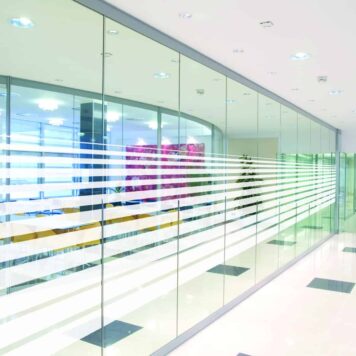

Decorative film can quickly and affordably alter the appearance and function of existing glass. It is suitable for both complete pane coverage and more detailed applications involving bands, borders, shapes or patterns.
Depending on the product selected, decorative window film can provide:
Performance, opacity and installation requirements vary between films, so installers should check the individual product specification before ordering.
Our decorative range includes Patterned Window Film, Coloured Window Film and Frosted Window Film for different privacy, design and light-transmission requirements.
Our decorative range includes several different styles and finishes.
Patterned film can be used to create traditional, contemporary or geometric designs on plain glazing. It is particularly suitable for entrance doors, internal partitions, feature windows and residential applications.
Designs may be used across the full pane or combined with clear areas, borders and cut details to produce a more bespoke result.
Coloured film introduces transparent or translucent colour to glazing while retaining varying levels of light transmission.
It can be used for retail interiors, hospitality environments, office partitions, educational settings and decorative residential projects. Different colours can also support wayfinding, brand schemes and visual zoning.
Frosted and etched-effect films obscure visibility while allowing natural light to pass through. They offer a practical alternative to sandblasted or acid-etched glass and can be applied to existing glazing with less disruption.
These films are commonly used on bathrooms, meeting rooms, entrance doors, office partitions and other areas where privacy is required.
Decorative films can also be cut into borders, manifestation bands, numbers, shapes and custom patterns.
This makes them suitable for projects that need a more tailored appearance, including branded interiors, feature glazing and safety manifestation on large panes.
Decorative window film is widely used across offices, retail environments, hospitality venues, schools and public buildings.
Typical applications include:
Film can help define separate areas while retaining light and creating a more considered interior finish. It can also be replaced more easily than permanently altered decorative glazing when branding or interior schemes change.
Translucent, frosted and patterned films can obscure the view through glass without blocking natural light completely.
This makes them useful for bathrooms, office partitions, treatment rooms, entrance doors and ground-floor windows. The level of privacy will depend on the film pattern, opacity, viewing distance and lighting conditions.
Decorative privacy film should not automatically be treated as security film. Where impact protection or glass-retention performance is required, a dedicated safety or security film should be specified.
Where increased privacy is the main priority, explore our wider Privacy Window Film range.
Decorative film can be used throughout the home to add character or privacy to existing glass.
Common applications include:
It provides a useful option where replacing the glass would be costly, disruptive or unnecessary.
Decorative privacy film should not be treated as security film. Where impact protection or glass retention is required, choose a dedicated Safety & Security Window Film.
Correct glass preparation is essential for a clean, professional finish. Most professional decorative films are installed using a wet-application method rather than being peeled and pressed directly onto the glass.
The usual process involves:
The exact installation method may vary between adhesive-backed and static-cling products, so the instructions supplied with the selected film should always be followed.
Many decorative films can be removed from suitable glass when they are no longer required. This makes them useful for changing interiors, temporary promotions, rented properties and evolving commercial branding.
Removal difficulty will depend on the adhesive, film age, exposure and glazing conditions. Some adhesive residue may remain and require careful cleaning after the film has been removed.
Decorative film should be cleaned with a soft cloth or non-abrasive squeegee and a mild cleaning solution.
Avoid abrasive pads, blades and harsh chemicals that could scratch or damage the film. Take extra care around the edges, particularly while the film is still curing after installation.
Browse our decorative window film range and choose from coloured, patterned, frosted and specialist decorative finishes.
Products are available in trade-friendly formats, including by-the-metre ordering and complete rolls where shown. Check the product width, minimum quantity, opacity, installation method and glazing suitability before placing your order.
For help selecting the right decorative film for a particular project, contact the Window Films Direct team for product guidance.
Correct installation requires a suitable fitting solution, squeegees and preparation tools. Browse our Window Film Fitting Equipment.
Yes. Many decorative films can be cut into borders, bands, logos, numbers, shapes and custom designs.
This makes them useful for bespoke interiors, office manifestation, branding and feature glazing.
Many decorative films can be removed from suitable glass and replaced when the design or privacy requirements change.
The ease of removal will depend on the film type, adhesive, age and exposure. Adhesive residue may sometimes need to be cleaned from the glass afterwards.
Many decorative films can be installed by competent users with the correct tools, a suitable fitting solution, and proper preparation.
For large panes, detailed patterns, commercial projects or specialist glazing, professional installation may provide a more consistent result.
Some decorative films reduce a proportion of ultraviolet radiation, but purely decorative products may provide limited heat or glare reduction.
Where solar control or UV reduction is an important requirement, check the technical specification or select a film designed specifically for that purpose.
Frosted, translucent and patterned films can obscure the view through the glass while allowing light to pass through.
The amount of privacy varies by product, pattern, lighting and viewing distance, so the individual film specification should be checked before ordering.
Use a soft cloth or non-abrasive squeegee with a mild cleaning solution.
Avoid rough sponges, abrasive cleaners, blades and harsh chemicals that could scratch or lift the film.
The lifespan of decorative window film depends on the product, installation quality, glazing type and exposure to sunlight and weather.
A correctly installed professional-grade film can provide many years of service when cleaned and maintained appropriately.
Many decorative films are suitable for bathrooms, kitchens and other humid environments when installed correctly on clean, suitable glass.
Care should be taken around exposed edges and areas subject to frequent direct water contact.